
Culinary training for International Cuisines in the Philippines taught by International Instructors

Updated: Aug 17
Where to Get Culinary Training for International Cuisines in the Philippines?
Setting Your Culinary Dreams Ablaze at La Flamme Bleue Center for Culinary Arts Tuguegarao
If you’ve ever dreamed of mastering the art of cooking dishes from all over the world—from Thai curries to French sauces, from Filipino adobo to Japanese sushi—you don’t need to travel abroad to receive world-class culinary training.
Right here in Region II of the Philippines, La Flamme Bleue Center for Culinary Arts in Tuguegarao City offers one of the most comprehensive International Culinary Diploma programs. This program is designed to prepare aspiring chefs for global kitchens, taught by chefs who have lived, trained, and been accredited abroad.
Why Study Culinary Arts in the Philippines?
The Philippines has become one of Asia’s fastest-growing destinations for culinary education. This growth is driven by high discretionary spending on food and beverage, influenced by the cultural aspect of gathering with friends and family. With an English-fluent culture, warm hospitality, and affordable tuition fees, the country graduates a high number of culinary students. This is due to the network of opportunities available internationally and the prospect of becoming an OFW to support family and friends.
Tuguegarao City, known for having one of the highest ratios of OFWs and international remittances, is home to La Flamme Bleue Center for Culinary Arts. This school has enabled over 390 graduates to start businesses or find work abroad and locally, blending global culinary techniques and standards with Filipino passion and a genuine love of food.
About La Flamme Bleue Center for Culinary Arts Tuguegarao
La Flamme Bleue (LFB) is a professional culinary training center recognized for producing graduates who thrive in both local and international kitchens. The Diploma in Culinary Arts provides a global curriculum taught by internationally trained chefs who have worked in fine-dining establishments and five-star hotels worldwide.
What Students Receive
Hands-on practice in fully equipped professional kitchens.
Exposure to 14 international cuisines and the corresponding classical techniques.
Instruction on kitchen management, sanitation, and entrepreneurship.
The program’s guiding philosophy—“Setting Your Culinary Dreams Ablaze”—emphasizes discipline, craftsmanship, and innovation grounded in tradition.
What Makes LFB’s Program Stand Out
International Curriculum – Covers Asian, European, and American cuisines.
Hands-On Training – Each student practices every dish under the guidance of experienced chefs.
Industry Internships – Opportunities in hotels, resorts, and restaurants in the Philippines and abroad.
Career-Ready Skills – From menu design to plating presentation and kitchen management.
Global Certifications – Graduates earn credentials recognized internationally.
International Cuisine Curriculum Overview
1. Filipino Cuisine and Fusion
Rooted in national identity, this module introduces balance among sweet, sour, and salty profiles through dishes such as Sisig, La Paz Batchoy, and Pinangat. Learners master stock building, braising, and regional plating aesthetics. Advanced sessions move into fusion work—Sinigang Ramen (Japanese stock with tamarind base), Laing Pasta (Bicol gabi leaves with Italian sauce technique), and Seared Chicken in Red Wine Adobo—where Western reductions meet Filipino flavors.

2. Vietnamese Cuisine
Students study aromatic broths, rice-flour batters, and herb balance.
Pho Bo demonstrates long extraction of collagen for clarity.
Bánh Xèo and Fresh Spring Rolls develop control over rice-flour viscosity and wrapper handling.
Emphasis is placed on freshness, timing, and the use of nuoc cham as a model for balanced dipping sauces.
3. Malaysian Cuisine
Key learning outcomes include:
Spice-paste development (rempah) for Beef Rendang—students practice grinding aromatics to a uniform consistency.
Coconut milk management and simmer control in Nasi Lemak.
Laksa integrates the concept of layered stocks and emulsified curry soups, demonstrating Malaysia’s multicultural palate (Malay-Chinese-Indian).
4. Thai Cuisine
Through Tom Kha Gai, Pad Thai, Tom Yum Goong, and Pineapple Fried Rice, learners explore the balance of four core flavors—sweet, sour, salty, spicy. Practical focus includes:
Infusion of galangal, lemongrass, and kaffir lime.
Sauce concentration and wok heat control.
Sensory calibration via continuous tasting and adjustment.
5. Chinese Cuisine
Students learn regional differentiation, such as Cantonese precision versus Sichuan heat. Training includes:
Dumpling folding and sealing (knife and dough work).
Wok hei development in stir-fry exercises.
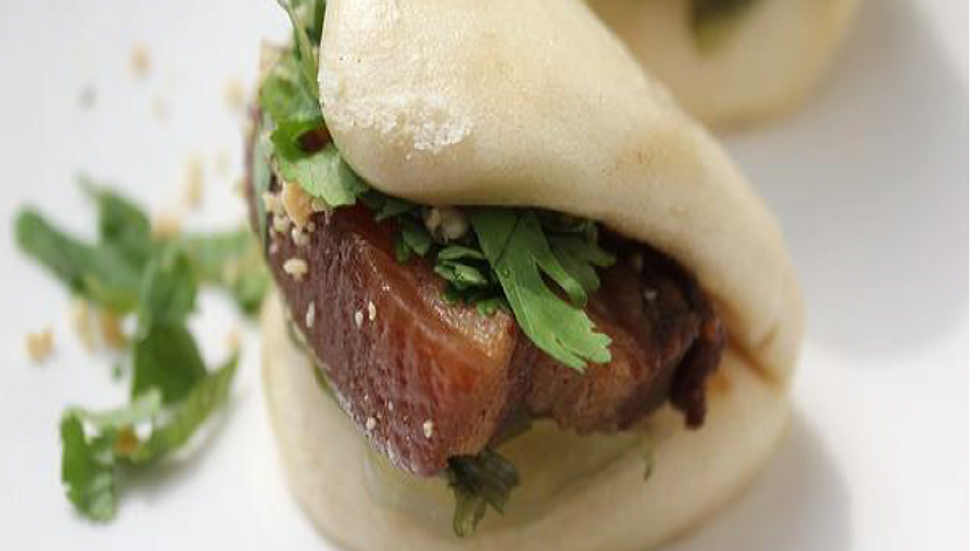
Bao and Gua Bao fermentation management. Techniques reinforce control of moisture, heat, and speed.
6. Japanese Cuisine
The Japanese module emphasizes knife discipline, rice preparation, and temperature precision. Learners practice:
Sushi and Sashimi cutting standards.
Tempura batter aeration and oil-temperature testing.
Ramen broth structure integrating dashi, tare, and aromatic oils. Students internalize Japanese culinary philosophy: minimalism, respect for ingredients, and clean presentation.

7. Korean Cuisine
Focuses on fermentation and umami control. Representative lessons include:
Bibimbap—color balance and synchronized cooking of components.
Beef Bulgogi—marination science (enzyme tenderization, sugar caramelization).
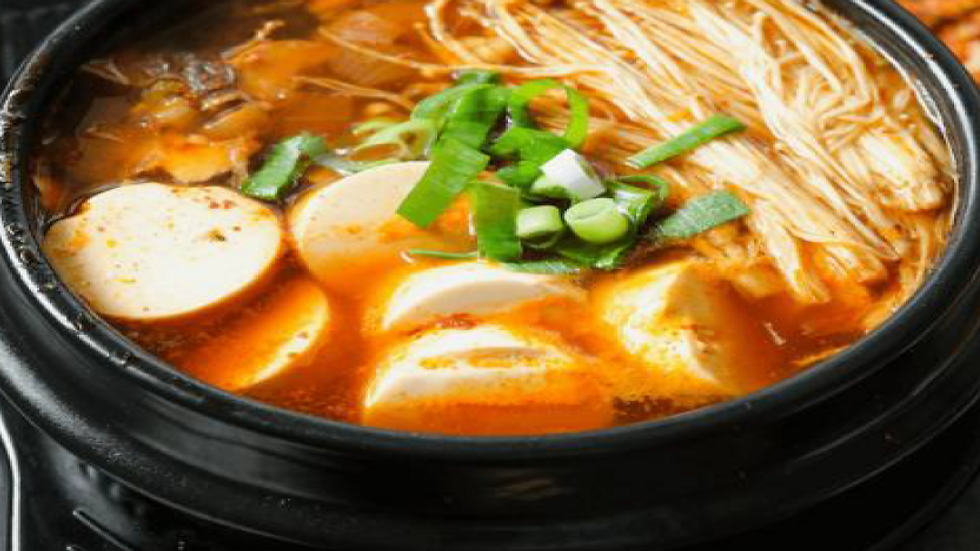
Sundubu Jjigae—simmering sequence for tofu soups. Students study gochujang, doenjang, and sesame oil as foundational Korean condiments.
8. Indian Cuisine
Learners master spice layering and tempering (tadka).
Butter Chicken teaches emulsified tomato-cream sauces.
Biryani introduces rice par-cooking and steam finishing (dum).
Jeera Rice and Naan highlight regional bread and starch control. Students analyze heat perception, spice volatility, and regional culinary grammar.
9. Greek Cuisine
Mediterranean methods focus on nutrition and balance:
Moussaka—layering, béchamel thickening, and oven timing.
Spanakopita—phyllo handling and moisture control in spinach fillings.
Souvlaki with Tzatziki—acidic marinades and yogurt stabilization. Olive oil cookery, grilling, and herb harmony dominate this unit.

10. French Cuisine
This module provides the technical backbone of Western cuisine.
Onion Soup demonstrates caramelization kinetics.
Coq au Vin and Boeuf Bourguignon explore braising and wine reduction.
Students practice the five mother sauces and derivative emulsions. Knife skills, mise en place organization, and plating geometry form the discipline’s foundation.

11. Italian Cuisine
Students study pasta, risotto, and dough science.
Fresh Ravioli covers hydration ratios and gluten elasticity.
Risotto alla Milanese illustrates starch release and stock management. Fusion exercise: Salted Egg and Dried Tomato Ravioli—Filipino umami integrated with Italian form. The unit reinforces tactile sensitivity and timing as hallmarks of Italian cookery.
12. Spanish Cuisine
Building on historical links between Spain and the Philippines, students examine:
Paella Valenciana—saffron infusion, socarrat formation, and stock calibration.
Gazpacho—cold emulsion and acid balance.
Albondigas and Fabada Asturiana—stew reduction and bean-protein integration. The course emphasizes rustic presentation and controlled spice warmth.
13. American Cuisine
Covers the diversity of North American regions:
Southern BBQ Ribs—dry rubs, slow roasting, and smoke mimicry.
Jambalaya—Creole trinity and one-pot sequencing.
Mac and Cheese—roux-based sauce thickening. Students also practice costing, portion control, and menu engineering typical of modern diners.
14. Mexican Cuisine
Learners discover color, spice, and texture layering.
Tacos de Carne Asada—marination and tortilla construction.
Mole and Salsa Roja—chili roasting, pureeing, and emulsification.
Guacamole and Enchiladas—acid management through lime and tomatillo. Attention is given to chili varietal heat mapping and cultural presentation styles.

Wine and Cheese Masterclass
Students are introduced to sensory pairing science:
Study of six cheese categories, from fresh to blue-veined, and their moisture and fat ratios.
Correlation between cheese texture and wine acidity or tannin level.
Exercises on palate cleansing, aromatic perception, and serving sequence. This module links gastronomy with hospitality and menu planning.
Check out the last wine and cheese masterclass highlight video hosted by our Academic Director Chef Martin Bower.
Professional Culinary Foundations
Parallel with regional modules, students complete core professional subjects:
Focus Area | Competency Developed |
Knife Skills & Safety | Precision cutting, speed, and ergonomics |
Food Sanitation & Hygiene | HACCP compliance and kitchen zoning |
Nutrition & Menu Planning | Balanced meal design and costing |
Kitchen Management | Team leadership and production flow |
Baking & Pastry Arts | Yeast fermentation, custards, lamination |
Restaurant Operations | Service simulation and cost control |
Culinary Entrepreneurship | Concept creation, branding, and pricing models |
A Culinary Training Hub in Northern Philippines
Our Location: Tuguegarao City, Cagayan Valley, Philippines
Nearby Areas Served: Isabela, Ilocos Region, Aparri, Laoag, and Nueva Vizcaya.
Students from across Luzon and even international enrollees find Tuguegarao an ideal place to study. The peaceful environment, affordable living costs, and accessibility by air or land make it a perfect choice.
Career Opportunities After Graduation
Graduates of La Flamme Bleue have gone on to work as:
Sous Chefs and Line Cooks in international hotels.
Food Entrepreneurs running their own cafés and catering businesses.
Pastry Chefs in local and global pastry shops.
Food Stylists and Consultants for restaurants and marketing agencies.
Culinary Instructors passing on their knowledge to the next generation.
With exposure to international cuisines, LFB graduates possess the versatility to adapt to any kitchen environment worldwide. They have entered professional kitchens in Singapore, Qatar, Dubai, Europe, Australia, and the USA, applying both Asian and Western competencies. See more of our Alumni and their stories.
Meet the Instructors
La Flamme Bleue prides itself on having internationally experienced chefs who bring authentic global techniques to the classroom. Many have trained in, worked, or managed award-winning restaurants and five-star hotels. This ensures that each lesson blends real-world practice with academic excellence.
Student Testimonials
"Armed with a diploma from La Flamme Bleue Center for Culinary Arts and a heart brimming with ambition, I set out to conquer new horizons. My journey took me to the vibrant culinary scene of Australia, where I landed a position at a top-notch restaurant renowned for its innovative cuisine and unparalleled dining experience." - Louis Paolo Narciso, Batch 7
“La Flamme Bleue Center for Culinary Arts prepared me in ways far beyond what I expected. From the very beginning, I was guided not only in mastering culinary techniques but also in building the discipline and confidence needed in this field. The hands-on training taught me how to adapt in a real kitchen environment, to be creative in every dish I make, and to always strive for excellence. What inspired me most was how the instructors believed in us, encouraged us to push past our limits, and reminded us that passion, when paired with hard work, can open doors to endless possibilities. LFBT didn’t just prepare me for a career—it prepared me for a future where I can turn my love for food into something meaningful and impactful. I leave with more than just skills; I leave with the courage, determination, and inspiration to follow my dreams as a chef." — Gleanne Ashley Arao, Batch 16
Why Choose an International Culinary Program in Tuguegarao?
Study under international chefs without leaving the Philippines.
Experience a curriculum spanning 14 international cuisines, designed for international kitchen expectations
Train in modern facilities built to industry standards.
Experience and learn 14 different international cuisines and authentic techniques in one diploma.
Graduate with the skills to work globally with recognized certifications and career mobility.
La Flamme Bleue Tuguegarao is not just a culinary school — it’s a launchpad for international culinary careers.
Discover the Philippines’ Most International Culinary Diploma
Ready to enrol? Visit the LFB admissions page to reserve your place.
Email info@laflammebleuetuguegarao.com and book a campus tour or register for an upcoming open house.


Comments